

)
)
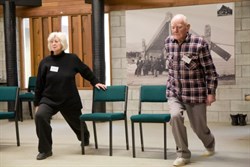 You should talk with your doctor about being active if you have a chronic health condition like arthritis, COPD, diabetes or heart disease. Your condition may limit your ability to be active in some way, and you may need to work with your doctor to come up with a physical activity plan that matches your abilities.
Try to do as much as you can if your condition stops you from meeting the recommended daily activity levels. What's important is that you avoid being inactive. Even just 60 minutes a week of moderate-intensity aerobic activity is good for you.
Find out about getting active with a disability or neurodegenerative disease such as Parkinson’s and MS, or recovery from a stroke.
You might be unsure about becoming active or boosting your level of physical activity because you're afraid of getting hurt. The good news is that moderate-intensity aerobic activity is generally safe for most people, like brisk walking.
Start slowly and gradually increase your level of activity. Cardiac events like heart attacks are rare during physical activity. However the risk does go up when you suddenly become much more active than usual. For example you can put yourself at risk if you don't usually get much physical activity and then all of a sudden do vigorous-intensity aerobic activity.
Check out the Getting started page for some tips.
Use the Greater Christchurch Sport and Recreation Guide to find a local group or class to help you get started and begin achieving your activity goals.
Water-based exercises can help with pain reduction, joint mobility, overall fitness, feeling happier, and make it easier to do everyday activities. You can do these kinds of activities even if you can't swim or are not water confident by using a floatation belt or vest or wearing water shoes to help keep traction on the bottom of the pool.
Some easy options to get started include:
- Walk slowly up and down in waist-high water, swinging your arms for 10 to 15 minutes.
- Raise and lower your forearms up to the level of the water keeping your elbows close to your body and wrists straight (12 to 15 repetitions).
- Do some slow squats and calf raises in deeper water for up to 15-20 minutes (starting at 10 repetitions).
- Take a gentle aqua fitness class and go easy on yourself. You could march on the spot if you need to slow down.
Laminated copies of water-based exercise sheets are available at the following Christchurch City Council Pools and Recreation centres:
- Graham Condon;
- Jellie Park;
- Matatiki Hornby Centre;
- Pioneer;
- Taiora QEII; and
- Te Pou Toetoe Linwood Pool.
This document has been produced by the Active Canterbury Network for exercise advocates and providers in the region - called ‘The Big List’ Directory.
The resource is divided into zones from Waimakariri to Ashburton and lists many classes and facilities that are particularly appropriate for older adults and people with long-term conditions. The Big List Directory will be updated as often as possible and get in touch if you spot any errors.
Download The Big List Directory - updated September 2025 [PDF].
When heart disease strikes, it doesn’t break just one heart. It breaks many. Your whānau, your friends and your community need you to take care of your heart.
My Heart Check is a free online heart health check. It uses your personal risk factors to assess your heart age and gives you tips for reducing your risk.
Fifteen years ago, Sunny Naidoo had never pulled on running shoes or set foot inside a gym. But after a heart attack and bypass surgery, he knew things had to change. He started walking with the support of his family, and that soon led to running. Now he’s competed in numerous events and even in the World Master’s Games. He wants people to help their hearts before it’s too late.
Find out more about Sunny's story - part of the Stand Strong campaign from the Heart Foundation.
MAP is a FREE eight-week programme for people with osteoarthritis that affects their hip or knee. This programme is available in-person or online.
Talk to your GP or other health professional if MAP is right for you - so they can refer you.
There are many great organisations both regionally and nationally that can provide you with relevant information about your health condition and ideas on how to get more active.
- The Heart Foundation provides detailed information about heart disease and a guide to improving lifestyles and staying well in the future.
- Diabetes New Zealand has some excellent information about physical activity and Type 2 diabetes including seated activity ideas.
- Arthritis New Zealand offers group exercise classes around Christchurch in Avonhead, Beckenham, Hornby, and St Albans. Call 0800 663 463 to find out about these classes and also their support groups in Christchurch, Geraldine, and Timaru.
- The NZ Cancer Society provides advice on building activity into your day when you have cancer. There is also lots of information on their website about what you can do to help reduce your cancer risk.
- Exercise as Medicine® NZ is a charitable trust offering specialist group exercise classes for older adults over 65 years with neurodegenerative diseases (such as Parkinson’s, MS and stroke), and long-term conditions (such as cancer, diabetes, osteoporosis and arthritis).
- The US National Center on Health, Physical Activity and Disability (NCHPAD) has a range of helpful factsheets describing various disabilities and health conditions, and the associated physical activity, exercise, and overall health considerations and recommendations.
- A free eight-week pulmonary rehabilitation programme is available for Cantabrians with long-term chest conditions like COPD. The programme consists of a two-hour session twice a week, and participants are encouraged to attend as many sessions as possible. Contact your GP or other health professional to see you for a referral and to see you are eligible for this programme.
- Challenge Diabetes
- Benefits of being active
- Recommended daily activity
- Easy ways to move more
- Getting started
- Support programmes
- Keeping motivated
- Karawhiua!
- Parents and caregivers
- Under fives
- Children and young people
- Older adults
- Active with a disability
- Active with a health condition
- Expecting and new mums